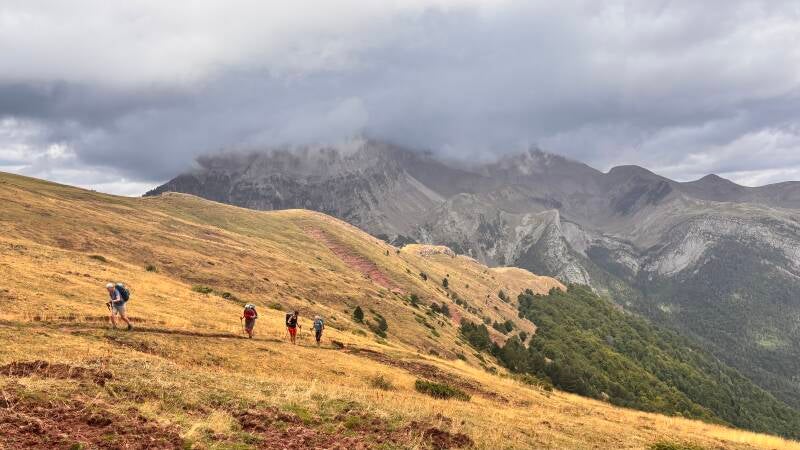
Walking: More Than Just Moving Forward
Walking may seem simple — just one foot in front of the other — but it is much more than physical movement. In a world obsessed with speed, performance and productivity, walking offers a quiet form of slow living that brings us back to a more human rhythm. When we walk, especially in nature, we give the brain a rare chance to rest from constant stimulation, notifications and decision-making.
Letting the Body Do What It Was Made For
Our bodies have been walking for thousands of years, long before sports watches, GPS tracking, pace statistics or heart‑rate graphs existed. Walking is one of the most natural forms of movement, something the body “remembers” at a deeper level than any workout plan. When we simply walk — without chasing distance, time or elevation gain — we return to a basic, instinctive way of being in our bodies, where movement feels easy and familiar rather than forced.
This kind of gentle movement supports both physical and mental health without putting pressure on performance. Instead of pushing limits, we let the body do what it knows best: moving steadily, breathing deeply and adjusting naturally to the terrain. In that simplicity, the nervous system calms down, and the mind begins to loosen its grip on worries and to‑do lists.
How Walking Gives the Brain a Break
Modern life keeps the brain in “on” mode almost all day: emails, messages, traffic, multitasking. Walking, especially in green spaces, offers mental rest in motion. Studies show that walking in nature can reduce stress, lower the risk of depression and help the brain recover its ability to focus. The steady rhythm of our steps acts like a soft metronome, giving the mind something simple and predictable to follow.
Research comparing walks in nature with walks in busy urban areas suggests that natural environments place fewer demands on our attention, allowing key brain networks to rest and reset. Instead of constantly scanning for dangers, signals and decisions, the brain can drift, daydream and quietly reorganize thoughts. This is why so many people say their best ideas arrive during a walk, not at a desk.
Nature, Mindfulness and Slow Living
Walking becomes even more powerful when we treat it as a mindful practice rather than just a way to “get steps in.” Mindful walking means paying attention to sensations: the contact of the feet with the ground, the temperature of the air, the sounds of birds or wind in the trees. This simple awareness anchors us in the present moment and gently breaks the loop of anxious or repetitive thinking.
Spending time walking in nature has been linked to better mood, reduced anxiety and even changes in brain areas related to stress. Instead of escaping life, we slow down enough to actually experience it: colours, smells, light and shadow along a trail. In this way, walking becomes a daily tool for mental wellbeing, a small act of sustainability for our own inner life.
Walking Back to Ourselves
Walking does not have to be fast, long or intense to be meaningful. A short, slow walk in a nearby park, along a river or through quiet streets can be enough to reset the mind and soften the body. Even ten or fifteen minutes of relaxed walking can improve mood and energy levels.
In a culture that constantly tells us to go faster, do more and track everything, choosing to walk without measuring can be a gentle act of resistance. It is a way of saying that our value is not in our statistics but in how we feel, think and live. Walking may not always take us somewhere new on the map, but it reliably brings us back to ourselves — calmer, clearer and more present.
Add comment
Comments